
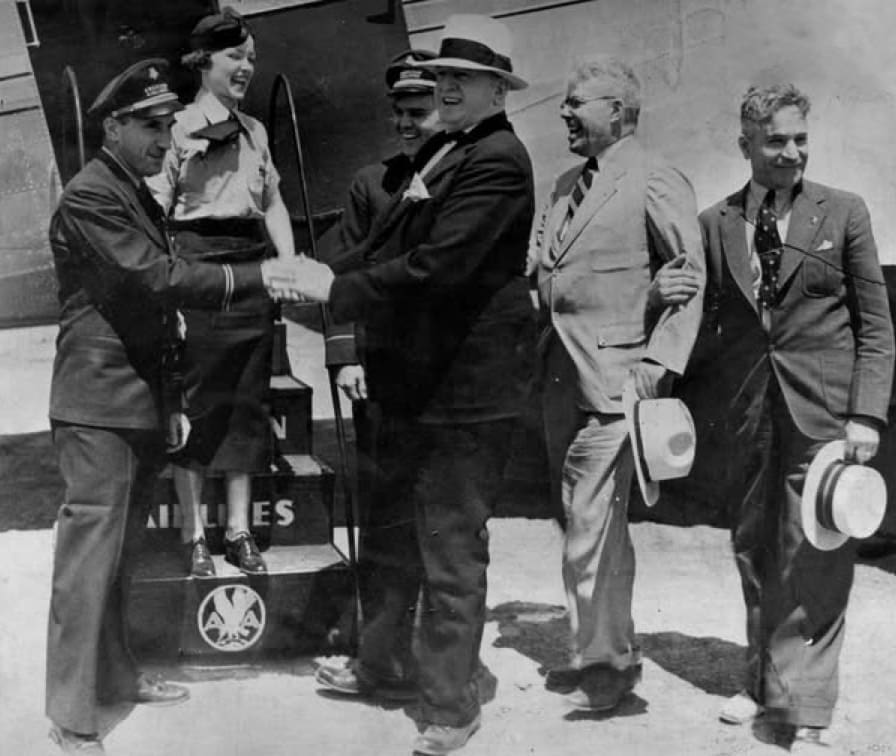
Col. Harry S. Berry deserves greater recognition as one of the key figures in Middle Tennessee aviation history. His legacy lives on today at Nashville International Airport, which still uses the call letters BNA—short for Berry Field Nashville. The airport first opened as Berry Field in 1937 and was named in his honor because of his leadership as Tennessee’s Works Progress Administration administrator.
Berry’s influence reached well beyond the airport’s name. After World War I, veterans in the Nashville area helped organize an air element of the Tennessee National Guard, and the 105th squadron became an important part of that story. In late 1930, the 105th Observation Squadron was moved from Nashville to Memphis because federal officials required Guard air units to operate from an A-1 airport. That move proved temporary, however, because the needed facilities in Memphis never fully materialized, and the squadron returned to the Nashville area in 1931 before ultimately moving to Berry Field in 1938.
By the mid-1930s, Nashville needed an airport larger and closer to the city than Sky Harbor. A citizens committee selected the present Murfreesboro Pike site in 1935, and construction began as one of the area’s first major WPA projects. Berry Field was dedicated in late 1936 and opened in 1937, giving Nashville the modern airport it needed for both commercial and military aviation.
Col. Berry was especially well suited for that task. Tennessee historical sources describe him as a West Point graduate, the state WPA administrator and a World War I artillery commander. He commanded the 115th Field Artillery, 30th Division and was widely respected for his leadership, organization, and military ability. Sources also indicate he led the First Tennessee Regiment, United States Volunteers during service on the Mexican border and later in France during World War I.
Because of that record, Berry was more than a namesake. He was a proven public servant, military officer, and builder whose work helped shape modern Nashville. Remembering him also helps preserve Hendersonville’s connection to a broader story of state service, aviation growth, and New Deal-era public works. Berry Field was not just an airport project—it was a lasting monument to Col. Harry Berry’s vision and leadership.
Frequently Asked Questions
Why is Nashville’s airport called BNA?
BNA stands for “Berry Field Nashville.” Nashville International Airport opened as Berry Field and kept the code BNA even after it was renamed in 1988.
Who was Berry Field named after?
Berry Field was named for Colonel Harry S. Berry, a West Point graduate and Tennessee’s Works Progress Administration (WPA) administrator, who oversaw the airfield’s construction.
When did Berry Field open?
Berry Field was dedicated in late 1936 and opened in 1937 on the Murfreesboro Pike site chosen by a citizens committee in 1935.
Is Berry Field the same as Nashville International Airport?
Yes. Berry Field was renamed Nashville International Airport in 1988 but kept its original airport code, BNA.


